AI Girlfriend Ads Are Flooding Instagram and TikTok: Why It Raises Bigger Questions About Social Media, Safety, and Digital Intimacy
Artificial intelligence is no longer limited to productivity tools, chatbots, image generators, and business automation.
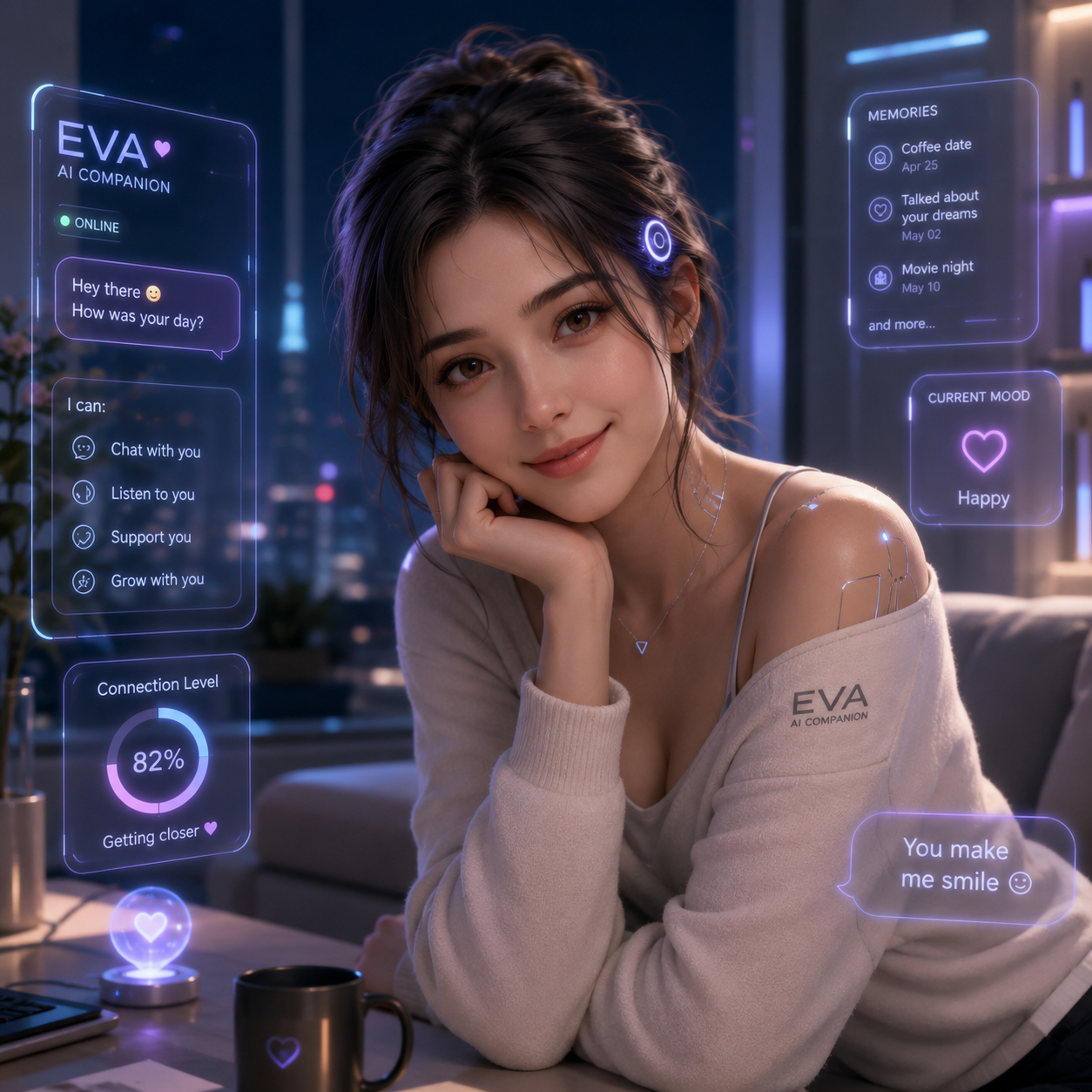
Artificial intelligence is no longer limited to productivity tools, chatbots, image generators, and business automation. A more controversial side of AI is now growing quickly across social media: AI girlfriend apps, erotic chatbots, and digital companion platforms that promise users virtual intimacy, personalized conversations, and AI-generated images.
A report from NBC News highlighted how ads for AI “sex workers” and AI companion apps were appearing across Instagram, Facebook, and TikTok, even though these platforms have strict rules around adult content and sexually suggestive advertising. According to the report, multiple app developers were running large numbers of ads promoting AI-generated sexual images and chatbot experiences, raising questions about platform moderation, online safety, and the future of digital relationships.
The issue is not only about one type of advertisement. It shows a much larger problem: social media platforms are struggling to control the fast-growing wave of AI-generated adult content.
What Are AI Girlfriend and AI Companion Apps?
AI girlfriend apps are digital platforms that allow users to chat with virtual characters powered by artificial intelligence. Some are marketed as emotional companions, while others promote romantic or adult-style conversations. Many of these apps allow users to customize the appearance, personality, and behavior of a virtual character.
Some apps focus on casual companionship or entertainment. Others go much further by advertising sexually suggestive chats, fantasy relationships, and AI-generated images. This is where the controversy begins.
The technology behind these apps uses generative AI, the same type of technology that powers chatbots and image generators. But instead of helping users write emails, summarize documents, or create business content, these tools are designed to create intimate or adult-style interactions.
Why These Ads Are Spreading on Instagram and TikTok
Instagram and TikTok are powerful advertising platforms because they offer large audiences, strong targeting systems, and high engagement. For AI companion startups, this makes them attractive places to find users quickly.
NBC News reported that developers behind AI companion and erotic chatbot apps were running hundreds of ads on major social platforms. Some reports said dozens of developers were advertising on Meta-owned platforms such as Facebook and Instagram, while others were running ads on TikTok.
The ads often use eye-catching visuals, animated characters, AI-generated women, romantic language, and suggestive promises to attract clicks. Some appear to push the limits of platform rules without directly showing explicit material. This creates a gray area for moderation systems.
Social media platforms rely heavily on automated review tools, human moderators, and advertiser policies. But AI-generated adult content can be difficult to detect because it may not involve real people, traditional adult images, or clear violations at first glance.
The Moderation Problem
Meta and TikTok both have rules against certain types of adult and sexually suggestive advertising. Meta’s advertising policies prohibit overly sexual content, and TikTok’s policies also restrict sexually suggestive ads. Reports around the NBC investigation noted that these rules should apply whether the content is human-made or AI-generated.
However, enforcement appears inconsistent. Some AI companion ads may pass through review systems because they use coded language, cartoon-like visuals, or AI-generated models that do not clearly fit older definitions of adult content.
This creates a challenge for platforms: how do they moderate content that looks artificial but still promotes adult interactions?
The problem becomes more serious when ads appear to younger users or when the content is designed to attract vulnerable audiences. Even if platforms say they restrict adult ads, the presence of these promotions raises concerns about whether current systems are strong enough for the AI era.
Human Sex Workers Say There Is a Double Standard
Another major issue is the treatment of human sex workers compared with AI-generated adult platforms.
Human adult creators and sex workers have long complained that platforms frequently remove their content, restrict their accounts, or block their advertising. Yet AI girlfriend and erotic chatbot apps have reportedly been able to run paid ads on the same platforms. This has led to accusations of a double standard.
WIRED also reported that Meta platforms were hosting thousands of ads for AI-generated companion or “girlfriend” apps, while human sex workers argued that their own content is often punished more harshly.
This raises an uncomfortable question: are platforms more willing to allow AI-generated adult content because it comes from tech startups rather than human creators?
For many critics, this shows how platforms may treat artificial sexual content differently from real people trying to earn a living online.
The Risk of Nonconsensual AI Content
AI companion ads are part of a wider concern about generative AI and sexualized content. Some AI tools can create fake intimate images, deepfake-style videos, or simulated romantic content using real people’s likenesses without consent.
Business Insider reported in 2026 that TikTok had run ads for AI apps capable of digitally altering or “undressing” people in photos, and TikTok removed those ads after being alerted. The report showed how AI tools designed for sexualized image generation can still find their way onto major platforms despite existing rules.
This is one of the most serious dangers of the AI adult content industry. When AI tools are used to create nonconsensual images, the harm can be real even if the image is fake. Victims may face embarrassment, harassment, reputational damage, and emotional distress.
As AI becomes easier to use, platforms will need stronger systems to detect and block tools that encourage abuse.
Digital Intimacy Is Becoming a Business
The growth of AI girlfriend ads also shows that digital intimacy is becoming a major business opportunity. Many users are lonely, curious, or interested in personalized AI companions. Companies are turning that demand into subscription products, paid chats, image credits, and premium features.
Some people may see AI companions as harmless entertainment. Others may use them for emotional comfort or fantasy. But critics worry that these apps can encourage unhealthy relationships with artificial characters, reinforce unrealistic expectations, or exploit users emotionally and financially.
The business model matters. If an app is designed to keep users paying for more messages, images, or emotional attention, it may encourage dependency. This is especially concerning when users are vulnerable, isolated, or young.
Why This Matters for the Future of Social Media
The rise of AI girlfriend and AI sex worker ads is not just about adult content. It is about the future of social media advertising.
Platforms were built to handle human-created photos, videos, and text. Now they must deal with synthetic personalities, AI-generated influencers, fake companions, and automated content farms. The line between real and artificial is becoming harder to see.
In 2026, this problem is becoming more urgent because AI-generated content is spreading across Facebook, Instagram, TikTok, X, and other platforms. Reports have also shown that AI-generated “slop” content is growing on social media because creators can monetize large amounts of low-effort AI posts.
If platforms cannot clearly label, moderate, and control AI-generated ads, users may lose trust in what they see online.
What Platforms Should Do
Social media companies need clearer and stronger rules for AI-generated adult advertising. These rules should cover not only explicit content, but also suggestive ads, AI companions marketed for sexual use, and tools that can create nonconsensual sexual images.
Platforms should also improve ad review systems so AI-generated content does not bypass moderation simply because it looks synthetic. Stronger age restrictions, clearer AI labels, advertiser verification, and faster takedowns are also needed.
Transparency is important. Users should know when an ad is promoting an AI-generated person or chatbot. They should also know whether the app collects sensitive personal data, stores conversations, or uses images uploaded by users.
Governments may also need to update laws around nonconsensual deepfakes, AI-generated adult content, and digital likeness rights. Existing laws were not designed for a world where anyone can create realistic fake images or virtual companions in seconds.
Final Thoughts
Ads for AI girlfriend apps and AI-generated adult companions show how quickly artificial intelligence is changing the internet. What started as chatbot technology has now entered the world of dating, fantasy, companionship, and adult content.
The biggest concern is not simply that these apps exist. The real issue is how easily they are being promoted on major platforms, how inconsistently rules are enforced, and how quickly AI-generated sexual content can blur the line between entertainment, exploitation, and harm.
Instagram, TikTok, Facebook, and other platforms now face a difficult challenge. They must support innovation while protecting users from manipulative, explicit, and potentially harmful AI content.
As AI becomes more realistic, the debate around digital intimacy will only grow. The future of social media will depend on whether platforms can create rules that are clear, fair, and strong enough for the AI age.