Samsung Galaxy S26 Ultra: What the Reviews Are Saying
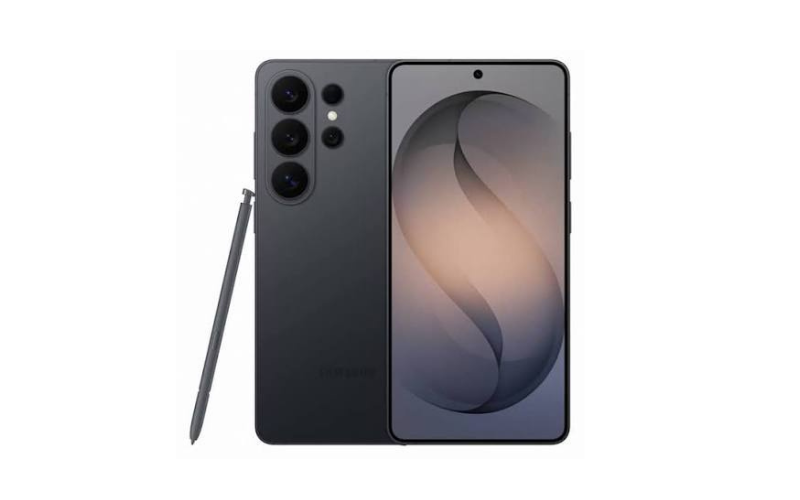
Samsung's Galaxy S26 Ultra, starting at $1,300, has now been in reviewers' hands for months, and a clear picture has emerged: this is less a dramatic reinvention than a careful refinement of a formula that's worked for years. The headline feature — a built-in Privacy Display — has dominated the conversation, while the rest of the phone (chip, cameras, battery) reads as a solid but incremental step up from the S25 Ultra. Here's how the major outlets are breaking it down.
Design: Finally Comfortable to Hold
After years of criticism over the Ultra line's blocky, brick-like feel, Samsung has softened the S26 Ultra's edges. Reviewers consistently note that the more rounded corners make the phone noticeably nicer to hold, especially for anyone who carries it without a case. Samsung also swapped the titanium frame used in recent generations for a new "Armor Aluminum 2" build. On paper that sounds like a downgrade, but several reviewers have come away impressed — aluminum takes color anodization better than titanium's PVD coating, which is part of why the S26 Ultra's finishes look richer than before. At 7.9mm thick, it's also the thinnest Ultra Samsung has made, and testers who directly compared it to Apple's iPhone 17 Pro Max described the Samsung as noticeably slimmer and lighter in hand.
The Privacy Display: Brilliant Idea, Real Trade-Offs
This is the feature everyone is talking about. Rather than a stick-on privacy film, Samsung engineered the privacy filter directly into the display at the sub-pixel level, interlacing normal wide-viewing OLED pixels with narrow-beam ones. Switch it on, and anyone viewing the screen from more than about 45 degrees off-axis sees a dark, unreadable panel, while the person holding the phone sees everything normally. Reviewers who tested it in public — on trains, in offices, next to strangers — describe it as genuinely effective and even a little startling to see in action, with granular controls that let users apply it to specific apps (banking, messaging) or just to sensitive on-screen text like notifications.
The catch is the cost to everyday display quality. Critics point out that, spec for spec, the S26 Ultra's panel isn't particularly impressive: it doesn't lead on brightness, resolution, or refresh rate, and it uses an 8-bit color pipeline at a time when rivals have moved past it. More pointedly, several reviewers report that the privacy layer reduces contrast and vibrancy even when the feature is switched off, and that the panel's flicker (PWM) characteristics may cause eye discomfort for sensitive users. In short: it's a genuinely novel, well-executed idea, but Samsung asked users to trade some baseline display quality to get it.
Performance: Finally on Par With Apple
Under the hood is a Galaxy-tuned Snapdragon 8 Elite Gen 5, paired with a redesigned vapor chamber for cooling. The consensus is that this is the first time in a while Samsung's silicon has felt like it's genuinely caught up to Apple, handling sustained gaming sessions and heavy multitasking without the throttling or heat build-up that dogged earlier Ultras. Reviewers who used the phone as a daily driver for months, including through hotspot use and travel, describe performance as consistently strong regardless of ambient temperature.

Cameras: Reliable, But No Longer the Class Leader
This is where the reviews get more mixed. The rear camera array is largely unchanged from the S25 Ultra on paper — 200MP main, 50MP ultrawide, a smaller 3x sensor, and a 50MP 5x periscope telephoto — but with wider apertures on the main and 5x lenses for better low-light capture. Most reviewers agree the photos are dependable in good light, with genuinely improved night video, and that Samsung's HDR processing does an especially good job balancing tricky, high-contrast scenes.
Where the S26 Ultra loses ground is against 2026's Chinese flagships. Head-to-head shootouts against the Oppo Find X9 Ultra and comparisons involving the Xiaomi 17 Ultra and Vivo X300 Ultra consistently find Samsung's camera hardware outmatched — smaller sensors, a weaker telephoto system, and a maximum 5x optical zoom versus rivals now pushing 10x. In one widely cited reader poll comparing S26 Ultra and Find X9 Ultra shots, well over half of voters preferred Oppo's images, with critics singling out Samsung's aggressive processing and less natural skin tones as the deciding factor. Several outlets that publish "buy this instead" style comparisons now point readers toward the Xiaomi 17 Ultra or Oppo Find X9 Pro specifically for camera quality, while still crediting Samsung with a more polished all-around software experience. There have also been user reports on Samsung's community forums of the camera occasionally struggling with motion tracking, producing blur on fast-moving subjects.
Battery and Charging: A Welcome, If Modest, Upgrade
The battery remains at 5,000 mAh — unchanged for several generations — which reviewers generally describe as "respectable but nothing special" for screen-on time. The bigger win is charging: Samsung has bumped wired charging to 60W with its new Super Fast Charging 3.0 standard, plus 25W wireless charging. Nearly every review flags this as one of the most tangible day-to-day improvements over previous Ultras, even if some testers still wish for a larger cell to match rivals like the OnePlus 15.
Software and the Bigger Picture
Samsung has leaned heavily into One UI 8.5 and its Galaxy AI suite this generation, and Samsung's own leadership has been candid that the company is "no longer chasing specs" the way it once did, focusing instead on software experiences layered on top of steady hardware. That framing lines up with what reviewers are finding: this is a phone that wins by being reliably excellent across the board — design, performance, software support (up to seven years of OS updates), and now privacy — rather than by leading in any single hardware category.
The Verdict
Most reviews land in similar territory: the Galaxy S26 Ultra is one of the most complete Android phones available, and for anyone who values reliability, One UI's polish, and a genuinely useful new privacy feature, it remains the safe, excellent choice at $1,300. But it's no longer the automatic pick for camera quality, where Chinese rivals have pulled ahead, and the Privacy Display's brightness and contrast trade-offs mean it's not a universal win, either. Existing S25 Ultra owners are broadly told to skip this generation; everyone else is getting Samsung's most refined Ultra yet, just not its most groundbreaking.
Sources: PhoneArena, PCMag, GSMArena, Android Central, Digital Trends, MobileSyrup, Android Authority, TechRadar, Digital Camera World, Notebookcheck, and Samsung's community forums.