Grok 4.5 Is Here, and Elon Musk Says It Matches Anthropic's Opus — For a Fraction of the Price
SpaceXAI shipped its newest AI model this week, and the pitch behind it is simple: nearly the same firepower as the industry's top models, at a noticeably lower cost.
SpaceXAI shipped its newest AI model this week, and the pitch behind it is simple: nearly the same firepower as the industry's top models, at a noticeably lower cost.
Grok 4.5 landed on Wednesday, marking the company's first release since it went public a few weeks ago. In the announcement post accompanying the launch, SpaceXAI described the model as a general-purpose workhorse — one built to handle the same broad category of tasks the rest of the AI industry has been racing to automate: writing code, building apps, research, drafting documents, and the kind of repetitive knowledge work that fills most office jobs.
The Efficiency Pitch
The headline claim isn't really about raw intelligence — it's about cost. SpaceXAI says Grok 4.5 delivers roughly double the token efficiency of competing top-tier models. In plain terms, that means doing the same amount of work while consuming far fewer tokens, which translates directly into lower bills for anyone running the model at scale.
That's a meaningful claim in a market where token costs have become one of the biggest pain points for companies building on top of these systems. Whether the efficiency gains hold up outside of SpaceXAI's own benchmarks remains to be seen, but the company backed up the announcement with a set of published benchmark results showing Grok 4.5 running competitively against rival models — close to the top of the pack, though not quite claiming the outright lead across the board.
Musk's Comparison to Anthropic's Opus
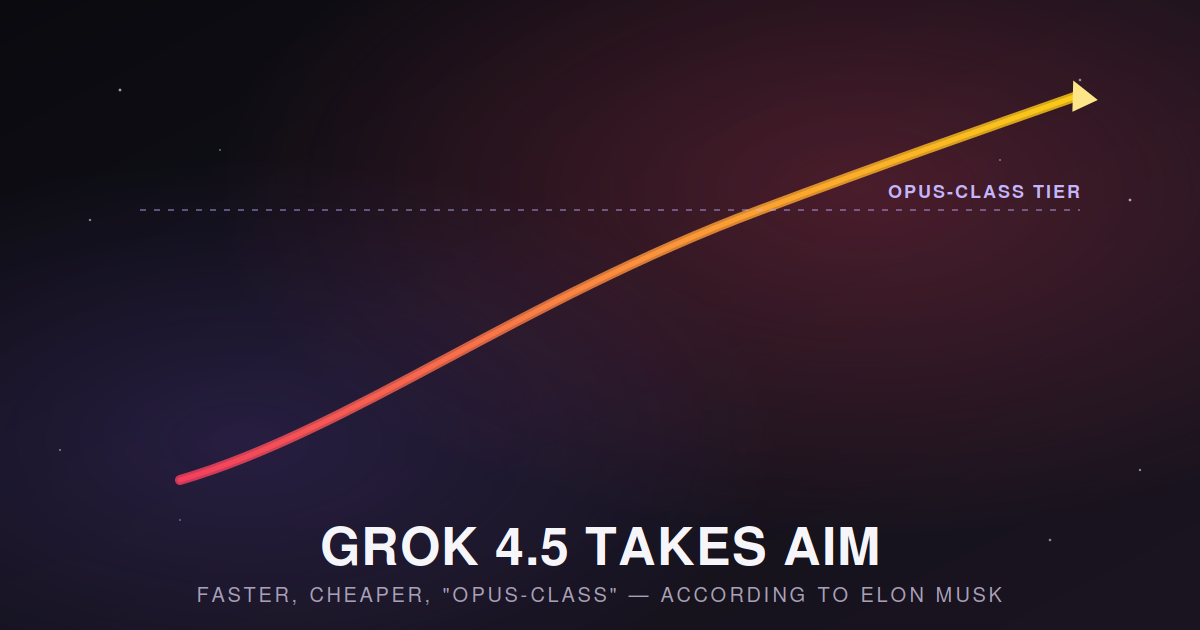
The more attention-grabbing part of the release came from Elon Musk himself, who used his own social platform, X, to frame the launch in blunt, comparative terms. Musk described Grok 4.5 as being in the same tier as Opus, Anthropic's flagship model built for complex, high-effort tasks — while claiming SpaceXAI's version comes in faster, cheaper, and more efficient with tokens.
He followed up shortly after with a more specific comparison, putting Grok 4.5 roughly on par with Anthropic's Opus 4.7 in terms of raw capability, while arguing that Grok's speed advantage is what actually makes it competitive day to day. It's a familiar move in this market: rather than claiming outright superiority, SpaceXAI is positioning Grok as the practical alternative — nearly as capable, but built to be faster and cheaper to run.
What It Actually Costs
Pricing is where SpaceXAI is making its clearest case. Grok 4.5 runs $2 per million input tokens and $6 per million output tokens. For comparison, Anthropic's Opus 4.7 costs $5 per million input tokens and $25 per million output tokens — meaning Grok is priced at roughly a third of Opus on the input side, and less than a quarter on the output side, assuming Musk's capability comparison actually holds up in practice.
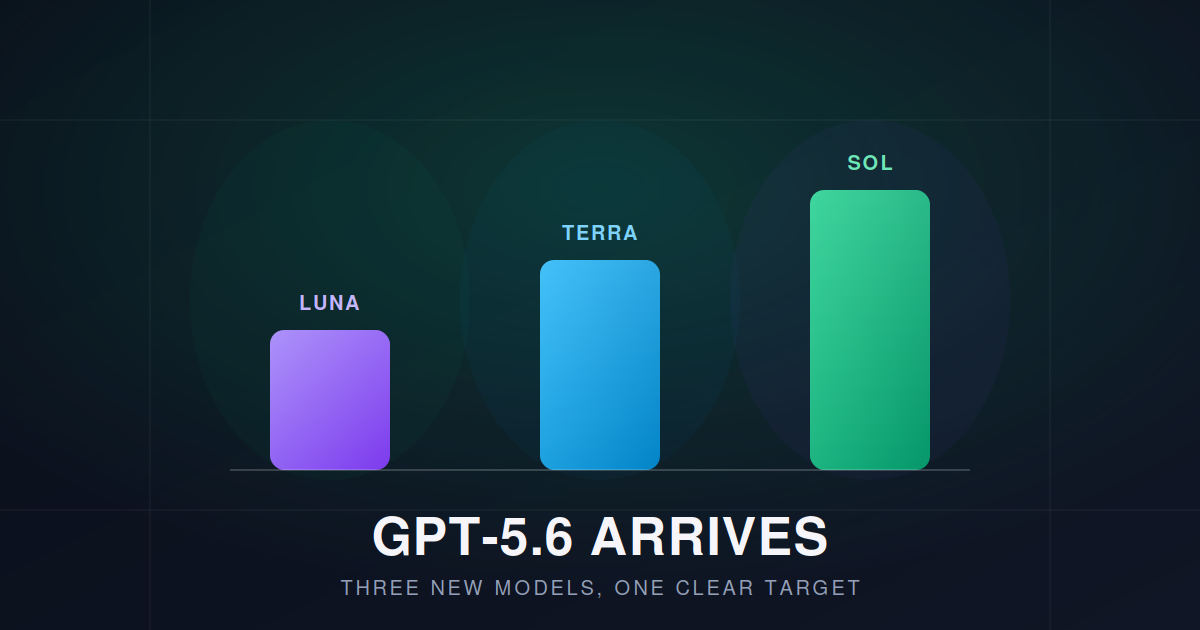
It's not just Anthropic that SpaceXAI is undercutting. OpenAI's own lineup, which uses a tiered pricing structure across its Sol, Terra, and Luna models, ranges from $5 input / $30 output on the high end down to $1 input / $6 output for its cheapest tier. Grok 4.5 lands in an interesting spot in that picture — more expensive than OpenAI's budget option, but positioned as offering far more capability for the price, according to Musk's own framing.
Of course, all of this is coming from the company that built the model, and self-reported efficiency numbers should always be read with a healthy amount of skepticism until independent testing catches up. Benchmark charts released alongside a launch tend to be selected because they favor the model being announced, not because they're the most representative comparison available.
A Crowded Week for AI Releases
Grok 4.5 didn't launch into a quiet news cycle. The release lands in the middle of a genuinely packed stretch for the AI industry, with OpenAI rolling out its own major update, GPT-5.6, in the same window. That release had reportedly faced its own hurdles — the model's rollout was said to have been slowed earlier this year over security concerns raised by U.S. officials, before eventually clearing the way for launch. OpenAI has been calling it the strongest model the company has ever shipped.
Taken together, the timing says a lot about where the AI industry currently stands. This isn't a market where companies are trickling out updates on their own separate schedules anymore — it's turned into a genuinely competitive sprint, with major labs releasing flagship models within days of each other and immediately drawing comparisons to whoever else is in the headlines that week.
Why This Matters Beyond the Headlines
For developers and businesses actually building on these platforms, the real story isn't which company wins the bragging rights — it's what this kind of competition does to pricing and access. When multiple labs are simultaneously pushing efficiency claims and undercutting each other on token costs, the practical effect is that running serious AI workloads gets cheaper across the board, regardless of which specific model ends up on top.
It's also worth watching how this plays out for Anthropic, since it's Anthropic's Opus that Musk chose as his benchmark for comparison rather than any other competitor. Being used as the reference point that a rival measures itself against is, in its own way, a signal of where the market currently sees the bar being set — even as SpaceXAI works to undercut that same bar on price.
Whether Grok 4.5 genuinely performs at the level Musk is describing will likely become clearer over the coming weeks, as independent developers and researchers put the model through its own paces outside of SpaceXAI's curated benchmarks. Until then, the numbers on the table — real capability aside — make one thing clear: the price war among frontier AI labs has officially arrived, and everyone building on these tools stands to benefit from it.